
NY-ALT Episode 116
By Sarah Kuhns, Sept 15, 2026
Physical AI & Opportunities for the Middle Market
Generative AI changed what machines can write. Physical AI changes what they can do, and it reaches the roughly 80% of the world's work that never happens at a computer.

Featured Guests
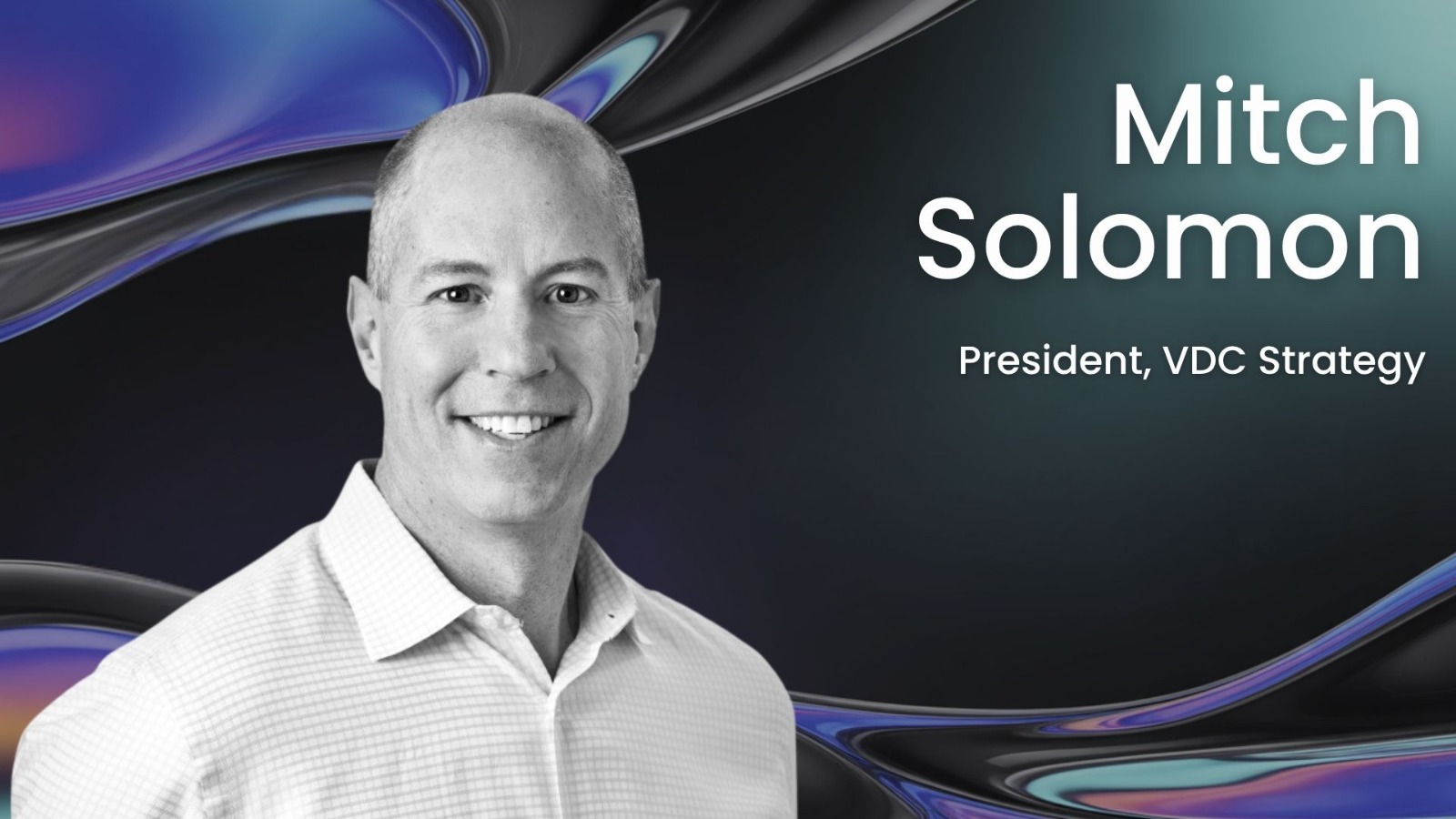
Mitch Solomon
President, VDC Strategy
Mitch has spent years supporting senior leaders of operational and industrial technology companies as well as private equity investors that participate in the space. He is an active member of the Technology and Innovation Council at Graham Partners, a leading industrial technology focused private equity firm, and serves on the advisory boards of OptConnect (a top IoT connectivity provider) and DecisionPoint (a rapidly growing operational technology systems integrator).
Mitch has worked closely with a wide range of industrial technology clients on a diverse array of growth opportunities and challenges including applications of AI, c-suite recruiting, strategic planning, new market identification and entry, product strategy, competitive positioning, revenue retention, value proposition identification and messaging, sales strategy and execution, and board presentations. Mitch holds a BA from Northwestern University and an MBA from The Tuck School of Business at Dartmouth College.

Chris Rommel
EVP, VDC Strategy
For nearly two decades, Chris has helped clients drive growth in operational and industrial technology businesses, from start-ups to middle-market companies to global enterprises. He has helped a wide variety of clients respond to and capitalize on diverse opportunities in AI, security, IoT, Industry 4.0, the intelligent edge, value-added hardware, semiconductors, engineering solutions, industrial and operational cloud computing and more.
Chris has extensive growth strategy consulting expertise including new market assessment, product strategy, M&A diligence, partner and ecosystem development, thought leadership content creation, and more. A frequent speaker at major industry events, Chris has written and published extensive research and thought leadership content on many dynamic technology markets. Chris holds a B.A. in Business Economics and a B.A. in Public and Private Sector Organization from Brown University.
Key Insights From This Episode
What is physical AI, and how is it different from generative AI?
Mitch Solomon's definition: artificial intelligence that enables machines to perceive and understand the physical world, make decisions, and independently take action within it. Generative AI produces a digital output a human can review and correct. Physical AI makes real decisions where a mistake can damage equipment or injure someone, so precision, control, and safety systems are not optional features.
There is no internet for physical AI to learn from, and that is the central bottleneck.
Generative AI arrived with decades of digitized human thought ready to train on. Physical AI has nothing equivalent, so every machine must be trained on every new task, either through simulation or through hundreds of teleoperated repetitions with tagged data. Finding the balance between what can be trained and what is commercially feasible to train is the hardest open question in the field.
The addressable market is larger than generative AI because most work is not done at a desk.
The World Bank estimates roughly one in five jobs globally is performed at a computer, leaving around three billion non-desk jobs, much of it dirty, dangerous, or dull. Add roughly 400 million workplace injuries a year, over 300,000 fatalities, and shortages of about 1.5 million healthcare workers, 600,000 manufacturing workers, and 300,000 truck drivers in the US, and the case extends well beyond labour substitution.
Separate the hype from the deployment reality.
When a humanoid robot handles a grocery bag on video, you do not know whether it was the first attempt or the ninety-ninth, or whether a human was teleoperating it with a headset and controller. For generalized tasks today, it is usually the latter. Meanwhile John Deere's See & Spray, which does one narrow task, is delivering reported 58% reductions in herbicide application and is priced on outcomes, charging by the acres you do not spray.
Near-term value favours enablers, long-term value favours whoever owns the data.
Chips, edge compute, simulation tools, and differentiated sensors are the picks and shovels, and many robotics companies will fail while still buying them. Over time value shifts to firms controlling the complete solution, the customer workflow, and the operating data. Mitch Solomon's contrarian note: a significant share may accrue not to technology suppliers at all, but to the companies deploying it most aggressively.
Diligence should test commercial viability, not technical capability.
Chris Rommel's filter: is it attached to an operational KPI the customer already cares about, such as downtime, scrap, labour, or safety incidents, and has it moved from pilot to production across different facilities and conditions? Near-term winners are focused systems, robotic arms, AMRs, vision-guided picking, rather than general-purpose humanoids. The market is voting with spend: AI development solutions growing 25% a year, edge compute above 40%, robotics revenue near 50%.
Grab The Session's Insights Deck
Access the podcast episode inside & get the free distilled insights, frameworks and key lessons from this conversation. Includes insights on separating physical AI hype from deployment reality, where value is likely to accrue across the technology stack, and the diligence questions that separate durable businesses from impressive demonstrations, specifically designed for financial services professionals.
Soundbites Worth Saving
"There is no internet physical AI can learn from. It has to learn from actual behaviors in the real world."
— Mitch Solomon
"There's going to be a lot of impressive physical AI demonstrations that never become great businesses."
— Chris Rommel
"There's somebody operating the robot like it's a video game, and the robot's not doing it themselves."
— Mitch Solomon
Shape the Future of Alternatives With Us
The New York Alternative Investment Roundtable brings together the brightest minds in finance—Nobel laureates, industry disruptors, Fortune 1000 executives, and leading fund managers. By joining as a member, you gain access to premium events, exclusive insights from our podcasts, and direct connections with the decision-makers shaping global markets.
Your seat at the table is waiting.

GET IN TOUCH:
© 2026 New York Alternative Investment Roundtable | Privacy Policy | Terms and Conditions